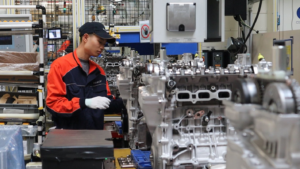

Worn valves, poor valve-seat contact and careless grinding lead to costly problems for cylinder head shops: engine comebacks, warranty claims, scrapped valves and wasted labour. Master professional valve grinding procedures and pick stable refacing equipment to cut scrap, reduce rework and boost your workshop throughput.
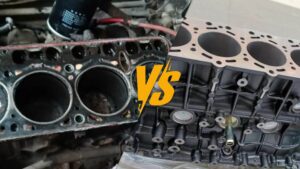
Engine valve grinding (valve refacing) is a precision step in cylinder head reconditioning. The goal is restoring valve face geometry to maintain tight combustion sealing, within OEM service limits.
📤 Download Free Valve Grinding Inspection Checklist
Get a printable PDF checklist for technicians to reduce scrap and rework. Enter your email to download.
Common Workshop Pain Points from Poor Valve Refacing
Many shops lose profits due to avoidable grinding errors:
- Inconsistent sealing → engine returns & warranty compensation
- Over-grinding → scrapped valves & wasted labour
- Old grinders with low repeatability → slow production and rework
- Skipped valve guide inspection → misaligned valve seat contact
Step-by-Step Valve Grinding Workflow
Always cross-check angles and tolerances against OEM service manuals.
1. Clean & inspect valves
Remove carbon. Check for pitting, burning, bending, cracks and remaining valve margin. Replace valves exceeding OEM damage limits.
2. Measure valve stem & guide clearance
Worn valve guides break concentricity and ruin contact patterns. Measure stem and guide bore before any seat machining, repair or replace guides when clearance is out of spec.
3. Set up your valve grinding machine
Check grinding wheel condition, dress glazed wheels, confirm target valve angle, verify chuck alignment and coolant for wet grinders. Common angles: 30° / 45°, always confirm per engine model.
4. Grind valve face with light passes
Use small cuts, inspect frequently. Only remove the minimal required material. Over-grinding reduces valve margin and ruins the valve.

5. Inspect & recondition valve seats
Refacing valves alone cannot guarantee good sealing. Check seats for pitting, runout and uneven wear. Use proper pilots to maintain concentricity with valve guides.
6. Test valve-to-seat contact (Bluing Test)
Apply Prussian blue compound, fit valve and check contact band. It must be continuous and sit at the correct position on valve face, matching OEM width requirements.
7. Final cleaning & inspection
Remove all grinding abrasive residue. Double-check margin, contact width, runout and stem clearance before assembly.
7 Practical Valve Grinding Tips
- Check valve guides before seat machining. Misaligned guides create bad contact patterns.
- Use light grinding passes and inspect often to avoid removing too much stock.
- Dress grinding wheels regularly. Glazed wheels cause poor surface finish.
- Confirm valve face angle against OEM specs; angles are not universal.
- Check both contact width AND contact position, shiny surface ≠ good seal.
- Do not over-lap valves. Lapping only works when approved by OEM procedures.
- Protect valve guides from abrasive grinding paste to prevent premature wear.
Common Grinding Mistakes & Fixes
| Problem | Risk | Solution |
| Grinding without checking guide clearance | Uneven valve contact | Measure stem-guide clearance first |
| Excessive stock removal | Scrap valves | Use light controlled cuts |
| Wrong valve face angle | Valve leakage | Follow OEM specifications |
| Poor wheel maintenance | Inconsistent finish | Inspect and dress wheels regularly |
| Improper seat machining | Patchy contact pattern | Maintain seat concentricity |
| Over-lapping | Damaged sealing surfaces | Limit lapping to OEM-approved jobs |
How to Select a Valve Grinding Machine for Your Shop
Key selection criteria
- Work range: Confirm valve head / stem diameter covers all engines you repair (car, diesel, heavy-duty).
- Accuracy & repeatability: Spindle rigidity, chuck quality and alignment decide consistent results. Request workpiece demo before purchase.
- Angle adjustment: Adjustable angle range to match your engine models.
- Cooling system: Wet grinding prevents valve burning and extends wheel life.
- Operation & maintenance: Simple clamping and wheel replacement reduce operator training time.
- Global support: Spare parts, operation videos, remote technical help, export packaging and custom voltage.
RICHON Cylinder Head Reconditioning Equipment
RICHON supplies engine remanufacturing machines for professional rebuild shops worldwide.

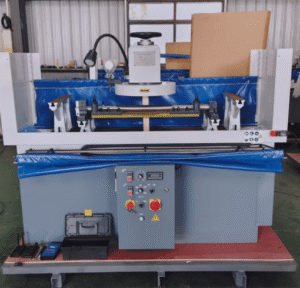
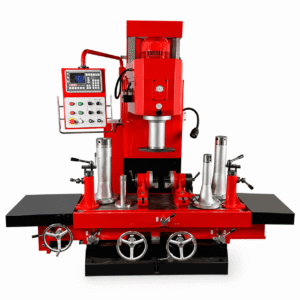
LD100B Valve Grinding Machine
Dedicated valve refacer for petrol and heavy-duty diesel valves, LD100B Valve Grinding Machine.
- ✅ Heavy-duty spindle for stable concentricity
- ✅ Wet grinding system to avoid valve burning
- ✅ Simple wheel dressing & angle adjustment, low training cost
- ✅ Export-ready packaging + global spare parts supply
- ✅ Pre-sales online demo & setup guidance
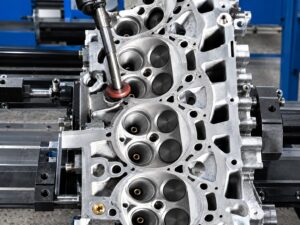
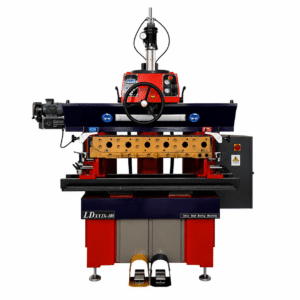
LD2000 Portable Valve Seat Boring Machine
For valve seat cutting & reconditioning. Pair it with the LD100B for full valve service, LD2000 Portable Valve Seat Boring Machine.
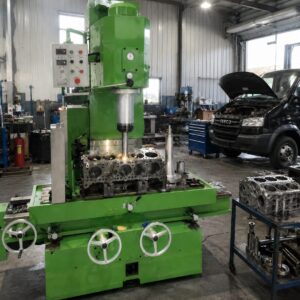
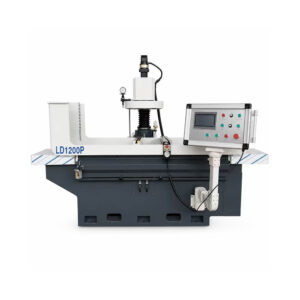
KSM850 Cylinder Head & Block Milling Machine
For resurfacing cylinder heads and engine blocks after valve work, KSM850 Cylinder Head & Block Milling Machine.
| Workshop Requirement | Recommended Machine |
| Valve face refacing | LD100B |
| Valve seat machining | LD2000 |
| Head surface milling | KSM850 |
| Complete cylinder head rebuild | Custom combo package |
FAQ
What is a valve grinding machine used for?
Reface valve faces, restore OEM sealing geometry and surface finish.
What is the difference between valve grinding and valve seat grinding?
Valve grinding works on the valve itself. Valve seat machining reworks seats inside the cylinder head.
What angle should I grind engine valves?
Depends on OEM specs. Common values: 30° and 45°, not universal.
Must I inspect valve guides before machining?
Yes. Worn guides break alignment and ruin valve seat contact.
How to test valve-to-seat contact?
Bluing / Prussian blue marking test. Check contact band position and width.
When to replace valves instead of grinding?
Replace valves if cracked, burned, insufficient margin, bent or worn beyond OEM tolerance.
Can RICHON machines support our local voltage?
We provide custom voltage & phase configuration for different countries. Share your local power specs in your inquiry.
Do you supply operation training videos?
Yes. Full setup, operation and maintenance videos included. Remote online training available.
What is your machine lead time?
Lead time varies by model. Contact sales for latest delivery schedule.
Conclusion
Good valve grinding is built on systematic inspection, precise setup and controlled stock removal. Stable matched equipment helps your shop reduce scrap and warranty issues.
RICHON provides full sets of valve refacing, seat machining and head milling equipment for engine rebuild shops. Contact us today to get your cylinder head reconditioning solution.


Ready to Upgrade Your Cylinder Head Workflow?
Talk to RICHON engineers about your workload and engine types to get a custom equipment recommendation.
✅ Request Quotation ✅ Download Machine Spec Sheets ✅ Book Online Demo
Request Quotation | WhatsApp: +86 13802208266 | vipsales@richon.com.cn
References (click to expand)
References for technical education only:
- FAA – Aviation Maintenance Technician Handbook (FAA-H-8083-32B)
- AERA Engine Builders Association technical resources
- Engine Builder Magazine articles on valve refacer maintenance
Disclaimer: This guide is general educational content only. Always follow OEM service manuals for your engine models. Third-party references do not represent partnership with RICHON.