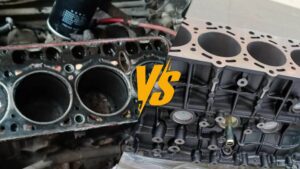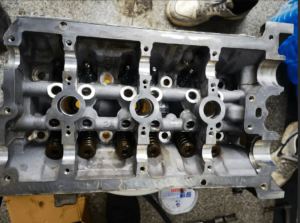
For heavy-duty engine rebuilding and remanufacturing shops, horizontal line boring is a critical machining process for restoring worn, distorted, or misaligned main bearing and camshaft bearing bores in engine blocks. When bearing bores lose alignment, the entire engine rebuild quality is compromised. The LD2300 Horizontal Line Boring Machine provides the precision and capacity required to restore bore geometry along a common centerline, ensuring reliable engine assembly for heavy-duty applications.
Why Is Line Boring Important in Heavy-Duty Engine Rebuilding?
Engine blocks can develop bore misalignment and dimensional wear after long-term operation, overheating, bearing damage, or previous repairs.
If the bearing bores are not correctly aligned, the rebuilt engine may experience incorrect bearing clearance, crankshaft alignment problems, unstable lubrication performance, and accelerated component wear.
A horizontal line boring machine allows multiple bearing bores to be machined along a common centerline, helping restore accurate bore geometry before final engine assembly.
What Types of Engines Require Horizontal Line Boring?
Heavy-duty engine machine shops commonly perform line boring and related bore-repair operations on:
- Heavy-duty truck engines
- Diesel engines
- Construction equipment engines
- Agricultural machinery engines
- Marine diesel engines
- Industrial and generator engines
- Passenger car engine blocks
US engine machine shops already use advanced machining equipment for block, head, crankshaft, camshaft and connecting-rod rebuilding. For example, Precision Automotive Diesel in Illinois lists cylinder-block line boring, line honing and resurfacing among its engine machining services, while other US diesel specialists perform line boring as part of complete engine remanufacturing.
How Does Horizontal Line Boring Improve Engine Block Machining?
The main advantage is controlled alignment. Instead of machining individual bearing bores separately and repeatedly repositioning the workpiece, a horizontal line boring process is designed to machine multiple aligned bores along a common axis.
This can help:
- Restore main bearing bore alignment
- Repair worn bearing housings
- Correct bore geometry after damage or previous machining
- Improve bearing fit
- Reduce repositioning errors
- Prepare the block for final engine assembly
Richon’s LD2300 is specifically designed for main bearing bores, camshaft bores and other aligned bearing housings.
What Makes the LD2300 Suitable for Heavy-Duty Engine Rebuilding?
The LD2300 Horizontal Line Boring Machine is designed for large engine blocks that require long machining travel and stable precision boring. Its key capabilities include:
- 2300 mm maximum cylinder machining stroke
- φ22–φ250 mm boring diameter range
- 0.005 mm cylindricity
- Ra 1.6 surface finish
- 30–600 rpm stepless spindle speed
- Full-servo drive system
- Heavy cast-iron machine structure
- Precision linear guides and ball screws
- Electronic handwheel for fine feed adjustment
- Independent manual lubrication for boring sleeves
These features are intended for professional engine rebuilding and remanufacturing operations where bore alignment, repeatability and stable machining performance are important.
Can the LD2300 Handle Large Diesel and Industrial Engine Blocks?
Yes. The LD2300 provides a 2300 mm machining length and a φ22–φ250 mm boring diameter range, allowing workshops to process a wide range of engine blocks.
Typical applications include heavy-duty trucks, buses, construction machinery, agricultural equipment, marine engines and industrial diesel power units.
Why Is Machining Stability Important for Line Boring?
Long boring operations require stable support and controlled cutting conditions. The LD2300 uses a heavy cast-iron frame to help absorb machining vibration, while servo-driven spindle and feed systems provide controlled movement during boring.
Its spindle uses a 1.8 kW servo motor, while the headstock and feed systems use independent servo drives for controlled machining.
What Power Supply Is Available for the LD2300?
The LD2300 supports:
110V / 220V / 380V | 50Hz / 60Hz
Both 1-phase and 3-phase configurations are available according to machine configuration and destination-market requirements. For US customers, the exact electrical configuration should be confirmed before ordering.
What Engine Rebuilding Businesses Can Benefit From This Machine?
The LD2300 is suitable for:
- Heavy-duty engine rebuilding shops
- Diesel engine machine shops
- Engine remanufacturing facilities
- Truck engine repair centers
- Marine engine service companies
- Agricultural machinery repair facilities
- Construction equipment maintenance shops
- Industrial engine and generator repair workshops
US machine shops demonstrate the importance of dedicated machining capabilities for heavy-duty engines. For example, Precision Automotive Diesel in Rockford, Illinois lists line boring, line honing, block resurfacing and other engine-block machining operations, while Holmes Performance & Machine in Ohio lists line boring alongside block surfacing, boring and sleeving for diesel engine work.
What Is the Difference Between Line Boring and Conventional Boring?
Conventional boring is commonly used to enlarge or correct individual bores. Line boring is specifically intended to restore the alignment of multiple related bores along a common centerline.
For engine rebuilding, this makes line boring particularly useful for worn or distorted main bearing tunnels and aligned camshaft bearing bores.
Why Are US Heavy-Duty Engine Shops Investing in Precision Machining Equipment?
The US heavy-duty engine rebuilding market covers truck, agricultural, construction, marine and industrial applications, where engine blocks and core components can be expensive to replace. Professional machine shops therefore need equipment that can reclaim usable engine components through controlled machining rather than automatically replacing complete blocks.
JASPER Engines & Transmissions, for example, describes its remanufacturing process as including machining of blocks, heads, crankshafts, camshafts and connecting rods, with an emphasis on qualifying and reclaiming usable components.
Is the LD2300 Suitable for a Professional Engine Remanufacturing Workshop?
Yes. With its long machining stroke, large boring range, servo-driven system and heavy-duty machine structure, the LD2300 is designed for professional engine rebuilding and remanufacturing applications requiring accurate main-bore and cam-bore machining.
For workshops processing large diesel, truck, marine, agricultural or industrial engine blocks, the LD2300 provides a dedicated horizontal line boring platform for block repair and remanufacturing.
Frequently Asked Questions
What is a horizontal line boring machine used for?
It is used to restore the alignment and geometry of multiple bearing bores in an engine block, including main bearing and camshaft bearing bores.
What diameter can the LD2300 bore?
The LD2300 has a φ22–φ250 mm boring diameter range.
What is the maximum machining length?
The maximum cylinder machining length is 2300 mm.
What machining accuracy can the LD2300 achieve?
The specified boring cylindricity is 0.005 mm, with a surface roughness of Ra 1.6 under the specified machining conditions.
Can it machine both main bearing and camshaft bores?
Yes. The LD2300 is designed for main bearing bores, camshaft bores and other aligned bearing housings.
Can the LD2300 machine diesel engine blocks?
Yes. It is suitable for diesel engines used in heavy-duty trucks, construction equipment, agricultural machinery, marine applications and industrial power units.
Does the LD2300 support US electrical standards?
The machine is available in 110V / 220V / 380V and 50Hz / 60Hz configurations, with 1-phase and 3-phase options depending on configuration. The exact specification should be confirmed before ordering.
What support is available after purchase?
Richon provides remote technical assistance, operation manuals, demonstration videos, maintenance guidance, troubleshooting support and spare parts assistance for international customers.
Where can I get more information about the LD2300?
Learn more about the LD2300 Horizontal Line Boring Machine on the official product page and contact Richon for technical specifications, configuration and quotation.
Restore Main & Cam Bearing Bore Alignment with the LD2300
Precision horizontal line boring for heavy-duty diesel, truck, marine and industrial engine rebuilding.