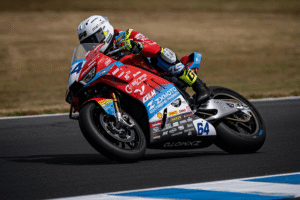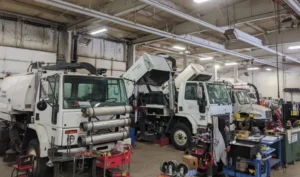

The 2026 Dakar Rally, FIA World Rally Championship and major cross-country rally events place extraordinary demands on racing engines.
Long desert stages, high ambient temperatures, continuous vibration, rapid thermal changes and sustained high-load operation can put enormous stress on production-based engine components.
While spectators see the speed, dust and competition on the outside, engine builders face a different challenge inside the workshop: how to keep the cylinder block within the required dimensional and surface specifications after demanding race operation.
For professional rally teams and motorsport engine specialists, cylinder-block inspection and precision machining can therefore become an important part of engine rebuilding and preparation.
Why Are Rally Engines So Demanding?
Cross-country rally engines operate in conditions that are very different from normal road use.
Depending on the vehicle and competition class, engines may experience:
- Long periods of high load
- High combustion temperatures
- Repeated acceleration and deceleration
- Severe vibration
- Rapid thermal cycling
- Dust and debris exposure
- Extended operation between service intervals
These conditions can place considerable stress on pistons, piston rings, cylinder walls, bearings and the engine block itself.
The challenge becomes even greater when the same engine needs to deliver reliable performance across multiple stages rather than only during a short competition session.
What Happens to a Cylinder Block During Repeated Rally Use?
Engine blocks are exposed to repeated heating and cooling throughout their operating life.
Over time, thermal cycling and mechanical loading can contribute to changes in component geometry.
Depending on the engine design and operating conditions, technicians may encounter:
- Cylinder-bore wear
- Bore taper
- Out-of-round cylinders
- Cylinder-wall scoring
- Deck-surface distortion
- Previous machining damage
- Cylinder-liner wear
These conditions cannot always be identified through visual inspection alone.
That is why professional engine rebuilding begins with measurement and inspection.
Why Does Cylinder-Deck Condition Matter?
The cylinder-block deck provides the mating surface between the engine block and cylinder head.
If the surface is warped, damaged or outside the required specification, maintaining reliable head-gasket sealing can become more difficult.
This is particularly important for engines operating under high combustion pressure.
During an engine rebuild, technicians may therefore inspect:
- Deck flatness
- Surface condition
- Parallelism
- Material removal from previous machining
- Head-gasket requirements
If machining is required, controlled deck resurfacing can restore the surface to the appropriate specification. Machines such as the KSM850 Engine Cylinder Head & Block Milling Machine are built specifically for this kind of precision resurfacing work.
The objective is not to remove as much material as possible.
It is to remove only the material necessary to achieve the required geometry and surface condition.
Why Is Cylinder Boring Important During a Rally-Engine Rebuild?
Cylinder bores can develop significant wear after extended operation.
If measurement shows that honing alone cannot restore the required geometry, cylinder boring may be necessary.
Boring removes a controlled amount of material from the cylinder to establish a new bore dimension.
This may allow the engine builder to use an appropriate oversize piston or prepare the bore for another repair method.
The final machining dimension must be determined from the engine manufacturer’s specifications, piston dimensions and required operating clearance. Dedicated boring machines such as the T8014A Cylinder Boring Machine and the T8016A Vertical Cylinder Boring Machine give the builder direct control over bore diameter, roundness and straightness.
Why Is Cylinder Honing Critical After Boring?
Boring establishes the basic bore geometry.
Honing is generally used as the finishing process.
A controlled honing operation can refine the bore dimension, improve geometric consistency and establish the required cylinder-wall surface texture.
The familiar cross-hatch pattern created by honing is particularly important because the cylinder wall must provide a suitable running surface for the piston rings while also supporting proper lubrication.
The required honing angle, roughness and surface characteristics depend on the engine design, piston-ring technology, cylinder material and lubrication requirements. The 3MB9817 Engine Cylinder Honing Machine is designed for exactly this finishing stage.
There is therefore no universal honing specification that applies to every rally engine.
How Does Cylinder-Wall Surface Finish Affect Piston Rings?
Piston rings perform several important functions.
They help control combustion gases, regulate oil on the cylinder wall and transfer heat from the piston.
Their performance depends partly on the relationship between the ring and the cylinder surface.
An unsuitable surface may affect ring seating, lubrication and wear.
A properly prepared cylinder surface helps establish the conditions required for the piston rings to operate as intended during engine break-in and subsequent operation.
This is why honing is not simply a cosmetic finishing operation.
It is an important part of the piston-cylinder interface.
Can New Racing Pistons Compensate for a Worn Cylinder?
No.
A new piston cannot correct an incorrectly machined cylinder bore.
If the existing bore has excessive taper, out-of-round wear or significant surface damage, installing a new piston and rings without addressing the bore condition may compromise the rebuild.
Professional engine builders therefore match the piston, cylinder and ring specifications as a complete system.
The process normally starts with measurement rather than component replacement.
What Role Do Cylinder Sleeves Play in Rally-Engine Rebuilding?
Some engines may require cylinder sleeves when the original bore cannot be safely restored through conventional boring and honing.
Sleeve installation can provide a new cylinder surface while preserving the structural integrity of the engine block.
However, sleeve installation is an application-specific repair.
The correct sleeve material, interference fit, installation method, final bore dimension and honing specification depend on the engine design.
Competition regulations must also be considered when modifying or replacing cylinder components.
How Do Rally Regulations Affect Engine Rebuilding?
Motorsport regulations vary significantly between competition categories.
Different classes may impose different requirements regarding:
- Original engine components
- Engine displacement
- Cylinder-block configuration
- Turbocharging
- Internal engine modifications
- Replacement components
- Machining allowances
For this reason, an engine builder should always verify the current technical regulations for the specific competition class before performing modifications.
The machining process may be technically possible without necessarily being competition-legal.
This distinction is particularly important in professional motorsport.
Why Do Teams Rebuild Rather Than Simply Replace Engine Blocks?
A competition engine represents a significant engineering and financial investment.
When an engine block remains structurally suitable for further service, recovering the component through inspection and precision machining can be more practical than automatically replacing the complete block.
A typical rebuilding workflow may include:
Inspection → Measurement → Deck Resurfacing → Bore Correction or Sleeve Installation → Honing → Final Measurement → Cleaning → Assembly
The exact sequence varies according to the engine condition and competition requirements.
The objective is to return the recoverable components to a controlled dimensional condition.
What Can Rally Racing Teach the Engine-Rebuilding Industry?
Rally racing provides an extreme example of the importance of engine durability.
But the underlying principles apply far beyond motorsport.
Heavy-duty diesel engines, commercial vehicles, agricultural machinery, marine engines and performance motorcycles can also operate under demanding thermal and mechanical conditions.
The same fundamental principles remain important:
Measure before machining.
Machine according to specification.
Control the surface condition.
Verify the finished component before assembly.
These principles help professional engine rebuilders maintain consistency across different types of engine work. A well-equipped shop combines them with hardware such as the MQ6280 Crankshaft Grinding Machine for rotating components and the LD1750 Cylinder Head & Block Pressure Tester for verifying sealing integrity after machining.
Why Is Precision Cylinder Machining Important Beyond Motorsport?
Most engine failures do not begin with something dramatic enough for a spectator to notice.
They can begin with gradual wear, dimensional changes, poor sealing or an unsuitable surface condition.
Precision machining provides a method for correcting these problems when the underlying component remains suitable for recovery.
For rally teams, this can support repeatable engine preparation.
For professional engine-rebuilding workshops, it can help extend the usable life of valuable engine components.
For the wider remanufacturing industry, it represents a fundamental part of recovering engineering value from used engine cores.
What Is the Real Foundation of Rally-Engine Reliability?
Turbocharger performance, engine mapping, fuel systems and high-performance internal components all contribute to racing performance.
But none of these systems can completely compensate for an engine block with incorrect geometry.
Cylinder-bore diameter, roundness, taper, surface finish, deck condition and component clearances all form part of the mechanical foundation of the engine.
These details are invisible from the side of a rally stage.
They are also rarely noticed by spectators.
Yet inside the engine workshop, they can determine whether a rebuilt engine is ready for another demanding competition cycle.
Rally racing is won on the stage, but engine reliability is built in the workshop — measurement by measurement, machining operation by machining operation.
Equip Your Workshop for Rally-Grade Engine Rebuilding
From cylinder boring and honing to deck resurfacing, crankshaft grinding and pressure testing, RICHON Auto supplies the precision machining equipment that rally engine builders rely on.
Frequently Asked Questions
How often should a rally engine cylinder block be inspected?
Inspection frequency depends on the competition calendar, engine design and operating conditions. Many professional teams inspect the block after each major event or after a defined number of competition hours. The key principle is to measure before symptoms appear — thermal cycling and high-load operation can change bore geometry gradually, and early measurement helps prevent in-stage failures.
What is the difference between cylinder boring and honing in a rally rebuild?
Boring removes material to correct significant wear, taper or out-of-round conditions and establishes the new bore dimension. Honing is the finishing operation that refines geometry and creates the cross-hatch surface texture needed for ring seating and lubrication. In most rally rebuilds the two are used in sequence: boring first when required, then honing. The T8014A Cylinder Boring Machine and 3MB9817 Cylinder Honing Machine cover both stages.
Why is deck resurfacing important for a rally engine?
Rally engines run high combustion pressures and experience severe thermal cycling, which can warp the cylinder-block deck. A warped deck prevents the head gasket from sealing properly, risking combustion-gas or coolant leakage. Controlled deck resurfacing with a machine like the KSM850 Cylinder Head & Block Milling Machine restores the flatness needed for reliable sealing under rally conditions.
Can’t I just install new pistons and rings in a worn rally cylinder?
No. New components cannot correct a tapered, out-of-round or scored bore. The new rings will conform to the distorted wall instead of sealing properly, leading to blow-by, oil consumption and accelerated wear — exactly the problems that cause in-stage failures. The cylinder must be measured and, when necessary, machined back to specification before any new components are installed.
Do rally regulations allow cylinder boring and sleeving?
It depends entirely on the competition class. Regulations differ on engine displacement, internal modifications, replacement components and machining allowances. Some classes permit oversize boring within a limit; others require standard bore dimensions. An engine builder should always verify the current technical regulations for the specific class before performing any cylinder modification.
What equipment does a rally engine workshop need?
A professional rally workshop typically needs a cylinder boring machine, a honing machine, deck resurfacing capability, crankshaft grinding and pressure testing equipment to verify the block and head after machining. RICHON Auto supplies this full range — including the T8016A Vertical Cylinder Boring Machine, KSM850 Milling Machine and LD1750 Pressure Tester — for workshops preparing engines for the most demanding cross-country competition.