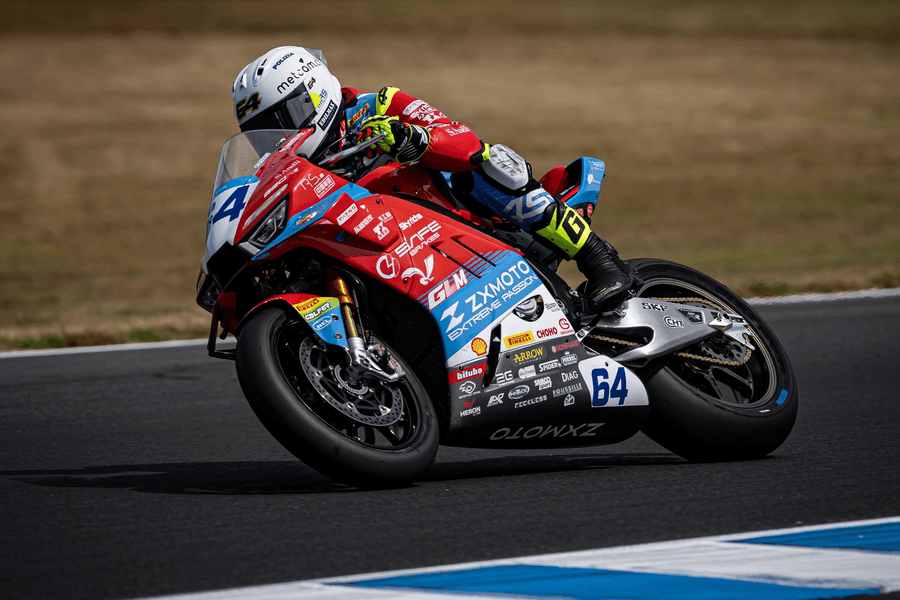
Zhang Xue Motorcycle’s 820RR has achieved six race wins in the WSBK World Supersport Championship, drawing significant attention from the global motorcycle racing community. Beyond the podium results, however, the motorcycle’s performance also highlights a deeper engineering question: how much does precision machining matter to a high-performance racing engine?
While racing fans focus on lap times, overtaking and championship battles, engine engineers work on a much less visible challenge — the control of cylinder geometry, surface finish and component alignment inside a power unit operating under extreme conditions.
For high-performance motorcycles, reliable engine output does not begin at the throttle.
It begins with the geometry of the components inside the engine.
Why Does Cylinder Precision Matter in Racing Motorcycle Engines?
Modern racing motorcycle engines operate at extremely high rotational speeds and experience repeated thermal and mechanical loading.
Inside the cylinder, the piston and piston rings move continuously against the cylinder wall. The relationship between these components must remain within carefully controlled dimensional limits.
Important characteristics include:
- Bore diameter
- Bore roundness
- Bore straightness
- Cylinder taper
- Surface finish
- Piston-to-cylinder clearance
- Piston-ring contact
- Cylinder-to-head sealing geometry
Even when the individual components appear visually perfect, dimensional errors can affect how the piston, rings and cylinder interact during operation.
This is why precision cylinder machining is an important part of high-performance engine development and rebuilding. Machines such as the T8016A Vertical Cylinder Boring Machine and the 3MB9817 Engine Cylinder Honing Machine are designed to give engine builders direct control over exactly these characteristics.
What Happens When a Motorcycle Cylinder Bore Is Worn or Distorted?
Cylinder bores do not remain unchanged throughout an engine’s service life.
Repeated thermal cycles, piston movement, lubrication conditions and mechanical loading can gradually change bore geometry.
A used cylinder may develop:
- Taper
- Out-of-round wear
- Scoring
- Surface damage
- Uneven wear patterns
- Localized distortion
These conditions can affect piston-ring sealing, oil control and friction.
For a professional engine builder, the correct response is not simply to install a new piston and rings.
The cylinder itself must first be measured.
Why Is Measurement the First Step in Cylinder Machining?
Precision engine rebuilding starts with inspection.
Before boring or honing, technicians need to understand the existing condition of the cylinder.
Measurements can determine whether the bore remains within specification or requires machining.
Depending on the condition of the engine, the rebuilding process may involve:
Inspection → Measurement → Boring → Honing → Final Measurement → Assembly
The exact sequence depends on the engine design, wear condition and required repair dimensions.
This measurement-driven approach is particularly important for high-performance engines, where component clearances and surface conditions can have a significant effect on operating behavior.
What Is the Difference Between Cylinder Boring and Cylinder Honing?
Cylinder boring and honing perform different functions.
Cylinder boring is a machining operation used to remove material and correct significant bore wear, taper or dimensional problems. Dedicated boring machines such as the T8014A Cylinder Boring Machine allow the bore to be returned to a correct cylindrical form before any finishing work begins.
Cylinder honing is generally a finishing process used to refine bore geometry and produce the required cylinder-wall surface texture.
In an engine rebuild, boring may establish the required bore dimension, while honing prepares the final surface for piston-ring operation.
They are complementary processes rather than interchangeable operations.
Why Does Cylinder Honing Create a Cross-Hatch Pattern?
The familiar cross-hatch pattern on a properly honed cylinder is not simply a visual characteristic.
It is a controlled surface texture created during the honing process.
The microscopic valleys can help retain lubricating oil on the cylinder wall, while the surface provides an appropriate running interface for piston rings.
The objective is therefore not to make the cylinder wall as smooth as possible.
It is to achieve the correct surface characteristics for the piston-ring and lubrication system.
If the surface is incorrectly finished, ring seating, oil control and wear behavior can be affected.
How Does Cylinder Bore Geometry Affect Engine Performance?
The cylinder, piston and piston rings form a closely connected mechanical system.
When bore geometry is outside the required specification, several operating characteristics can be affected, including:
- Friction
- Ring sealing
- Oil consumption
- Blow-by
- Compression
- Cylinder-wall wear
- Thermal behavior
- Long-term durability
Not every performance problem originates from cylinder machining. Fuel system calibration, lubrication, piston design, ring condition, assembly quality and operating conditions are also important.
However, correct cylinder geometry provides the necessary foundation for these components to function as designed.
Why Is Cylinder Machining Especially Important in Racing Engines?
Racing engines are designed around demanding operating conditions.
High RPM, rapid acceleration, elevated combustion temperatures and repeated thermal cycles place significant stress on the piston-cylinder system.
Under these conditions, poor bore geometry or an unsuitable surface finish can become more significant than it would be in a lightly loaded engine.
This is why professional racing-engine preparation places strong emphasis on:
- Dimensional inspection
- Bore geometry
- Surface finish
- Component matching
- Piston clearance
- Ring condition
- Final measurement
The objective is not simply maximum power.
It is consistent performance under demanding operating conditions.
Does Precision Cylinder Machining Matter to Normal Motorcycles?
Yes.
The same basic engineering principles apply to road motorcycles, sport bikes, off-road motorcycles, touring motorcycles, cruisers and vintage engines.
After years of operation, a motorcycle cylinder can develop wear or distortion.
During an engine rebuild, technicians may need to determine whether the cylinder can be honed directly or whether boring is required first.
The appropriate process depends on the measured condition of the cylinder and the specifications of the engine.
Why Can’t New Pistons and Rings Simply Be Installed in a Worn Cylinder?
New components cannot automatically correct an incorrectly dimensioned cylinder.
If the bore is tapered, out of round or heavily damaged, new piston rings may not seat consistently against the cylinder wall.
This can contribute to poor sealing, increased oil consumption and accelerated wear.
Professional rebuilding therefore treats the cylinder bore as a precision-machined component rather than simply a housing for the piston.
The bore must be measured, machined when necessary and inspected again before final assembly.
What Does the 820RR’s Racing Success Tell Us About Motorcycle Engineering?
The six WSBK race wins achieved by Zhang Xue Motorcycle’s 820RR provide an interesting example of the increasing technical competitiveness of Chinese motorcycle engineering.
But racing success is never the result of one component or one machining operation.
It is the result of an entire engineering system involving:
- Engine design
- Materials
- Combustion
- Lubrication
- Cooling
- Electronics
- Chassis development
- Aerodynamics
- Manufacturing precision
- Testing
- Race strategy
- Rider performance
Precision machining is one part of this much larger engineering chain.
Its importance lies in providing components with the geometry and surface characteristics required by the rest of the system.
What Can Motorcycle Repair Shops Learn From Racing Technology?
The most important lesson is not that every road motorcycle needs racing-level machining tolerances.
It is that precision should be measured rather than assumed.
A cylinder may look acceptable but still have measurable taper or out-of-round wear.
A cylinder wall may appear smooth but have an unsuitable surface texture.
A new piston may fit dimensionally but still require the cylinder to be prepared correctly.
Professional engine rebuilding therefore follows a simple principle:
Measure first. Machine according to specification. Verify before assembly.
A well-equipped workshop combines this discipline with the right hardware — from boring and honing machines to supporting equipment such as the KSM850 Cylinder Head & Block Milling Machine, the MQ6280 Crankshaft Grinding Machine and the LD1750 Cylinder Head & Block Pressure Tester for verifying sealing integrity after machining.
Why Will Precision Cylinder Machining Remain Important?
As motorcycle engines become more highly engineered, professional workshops will continue to rely on accurate machining and measurement to restore worn components.
Performance motorcycles, racing engines and older motorcycle engines all create different machining requirements, but they share the same fundamental relationship between the piston, rings and cylinder.
The quality of that relationship depends on geometry, clearance and surface condition.
The racing world simply makes this principle easier to see.
A fraction of a second on the racetrack may depend on thousands of engineering decisions made long before the motorcycle reaches the starting grid.
And inside the engine, those decisions ultimately come down to something remarkably simple:
accurate dimensions, controlled surfaces and reliable mechanical relationships.
From the Racetrack to the Workshop
Zhang Xue Motorcycle’s 820RR and its six WSBK race victories demonstrate how quickly motorcycle engineering continues to evolve.
But the broader lesson extends beyond racing.
Whether an engine is being prepared for a world championship, rebuilt for a road motorcycle or restored after years of service, precision machining remains a fundamental part of achieving reliable mechanical performance.
The rider sees the speed.
The engineer sees the measurements behind it.
And long before an engine reaches the racetrack, performance is already being built into the geometry of its cylinders.
In high-performance motorcycle engineering, precision is not simply a machining detail. It is part of the foundation of performance, reliability and durability.
Explore RICHON Auto’s Cylinder Machining Solutions
From cylinder boring and honing to crankshaft grinding and pressure testing, RICHON Auto provides the precision machining equipment that motorcycle engine builders worldwide rely on.
Frequently Asked Questions
Does a road motorcycle need racing-level cylinder machining tolerances?
No. Racing engines operate under far more extreme conditions than road engines. However, the same fundamental principle applies to both: correct bore geometry, proper surface finish and verified clearances are what allow pistons and rings to function reliably, whether the engine revs to 16,000 RPM on a racetrack or cruises on the highway.
What is the difference between cylinder boring and cylinder honing?
Boring removes material to correct significant wear, taper or out-of-round conditions and establishes the bore dimension. Honing is a finishing operation that refines geometry and creates the controlled cross-hatch surface texture needed for piston-ring seating and oil retention. Most rebuilds use both: boring first if required, then honing. Machines like the T8014A Cylinder Boring Machine and 3MB9817 Cylinder Honing Machine cover both stages.
Why can’t I just install new pistons and rings in a worn cylinder?
New components cannot correct a tapered or out-of-round bore. The new rings will conform to the distorted cylinder wall instead of sealing properly, leading to poor compression, increased oil consumption, blow-by and accelerated wear. The cylinder must be measured and, when necessary, machined back to specification before new components are installed.
What is the purpose of the cross-hatch pattern on a honed cylinder?
The cross-hatch is a controlled surface texture, not a cosmetic feature. Its microscopic valleys retain a thin oil film on the cylinder wall for lubrication, while the plateaus provide the running interface for piston rings. An incorrect surface finish can cause poor ring seating, excessive oil consumption or accelerated wear.
How do technicians decide whether a cylinder needs boring or just honing?
The decision is based on measurement, not appearance. Technicians measure bore diameter, taper, roundness and surface condition, then compare the results against the engine’s specifications and available oversize pistons. If wear exceeds what honing alone can correct, boring to the next oversize is required. If geometry is still within specification, deglazing and honing may be sufficient.
What equipment does a motorcycle engine rebuilding shop need?
A professional shop typically needs a cylinder boring machine, a honing machine, crankshaft grinding capability, cylinder head resurfacing equipment, and pressure testing equipment to verify the block and head after machining. RICHON Auto supplies this full range — including the T8016A Vertical Cylinder Boring Machine and the LD1750 Cylinder Head & Block Pressure Tester — for shops serving both road and racing customers.