Background
A commercial engine rebuilder in Mexico City served freight trucks, buses, and agricultural equipment. These engines are large, expensive, and intolerant of imprecise valve work. The shop’s manual methods had become a bottleneck.
The Challenge
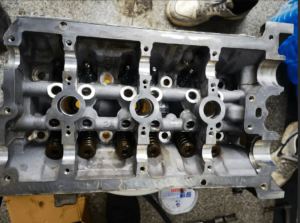
Manual valve seat cutting on heavy-duty heads was slow and physically demanding. The shop faced three problems:
- Inconsistent angles. Manual cutters struggled to hold the precise seat angles that commercial engines need.
- Operator fatigue. Cutting hard seats in cast iron heads was labor-intensive and inconsistent from one technician to another.
- Capacity limits. Each seat took too long, limiting how many heads the shop could rebuild per week.
The Solution
The shop installed the BV-60 valve seat boring machine. It cuts seats from 14 mm to 60 mm with 0.5° angle accuracy, uses a pneumatic clamp for quick setup, and runs a stepless 0-1200 rpm servo spindle. The machine also reduces cutting force by about 30%, which matters when working on hard, heat-treated seats.
The Results
- Seat angle accuracy: consistently within the 0.5° specification, compared with variable results by hand.
- Seat rebuild time: reduced by about 35% per head.
- Weekly throughput: head rebuild capacity rose by roughly 30%.
- Operator strain: less physical effort, more consistent output across shifts.
Key Takeaway
For commercial engine rebuilders, valve seat accuracy is not optional. The BV-60 gave this Mexican shop the repeatability and cutting efficiency to handle heavier heads faster, with less rework and less operator fatigue.