
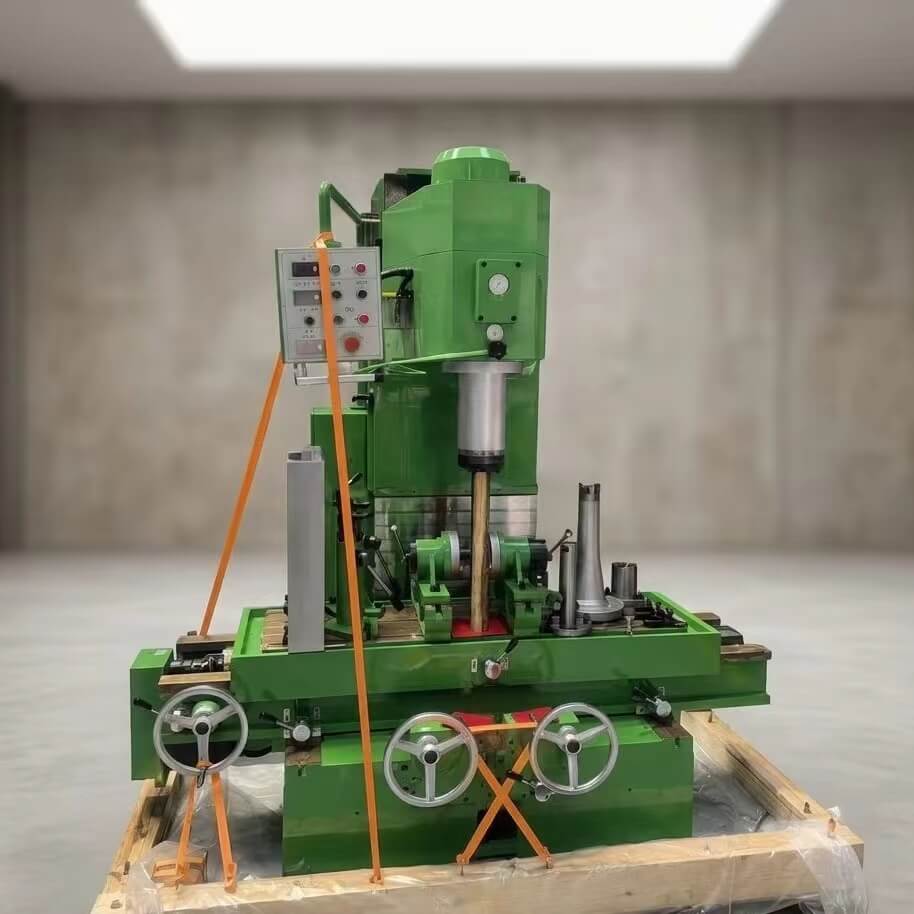
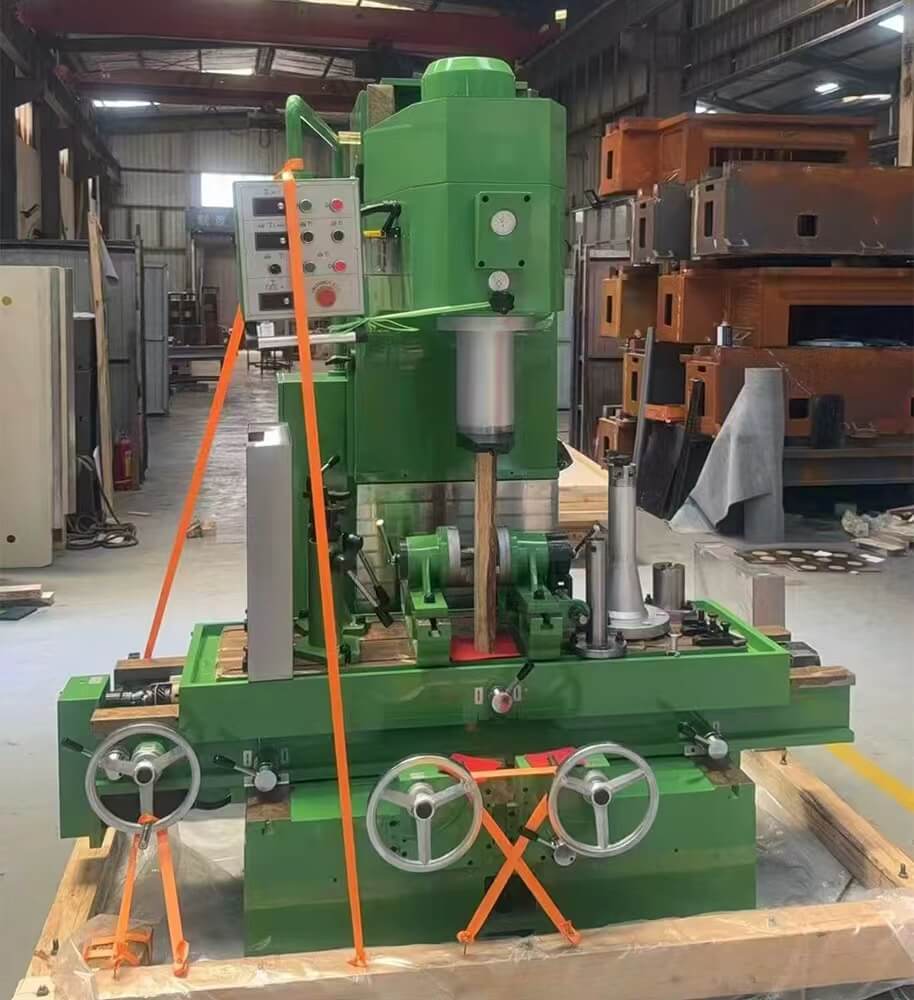
What problem does it solve?
After overheating or high mileage, cylinder bores go oval and scored, sleeve seats wear loose, and the block deck warps. Rebuilding that block used to mean one machine for boring, another for milling, and a third setup to keep them concentric.
T7220D helps workshops:
Key Features
Large Boring Capacity
200 mm Bore × 500 mm Depth
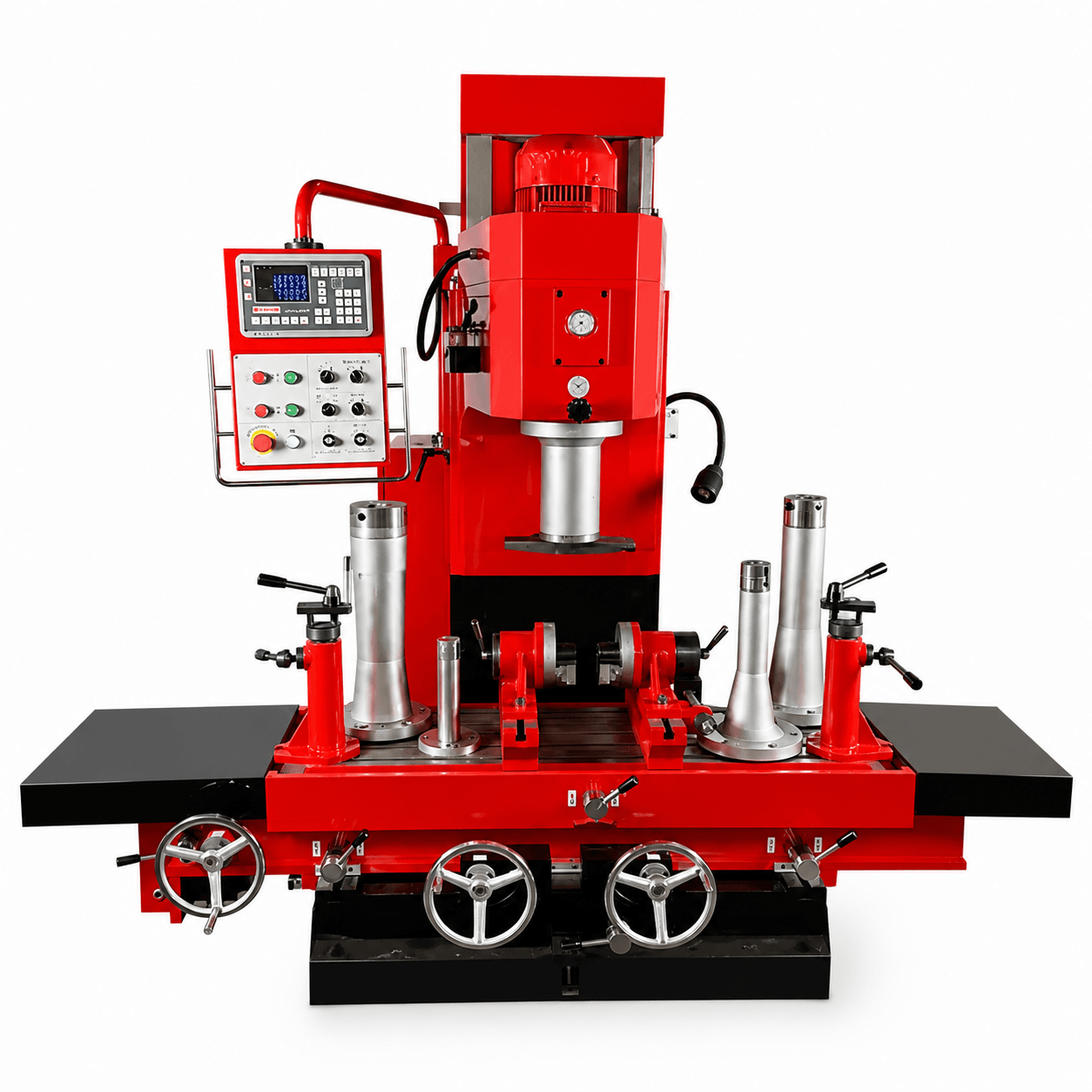
Covers automotive and light truck cylinder blocks, motorcycle cylinder sleeves and compressor bodies in one machine — no need to turn the block for a second setup.
Boring and Milling in One Setup
Single Clamping, Two Machining Operations
The 400×1000 mm milling area and 500×1500 mm table take the whole block, so boring and deck milling happen without re-fixture. Concentricity between the bore axis and the machined face stops being an operator skill and becomes a machine property.
H7-Grade Boring Accuracy
0.005 mm Roundness · 0.01/300 mm Cylindricity
Bored holes come off at H7 tolerance with Ra 2.5 µm surface finish, directly ready for honing or sleeve fitting. Spindle feed is stepless from 14 to 900 mm/min, so the finishing pass can be slowed down without stopping the cycle.
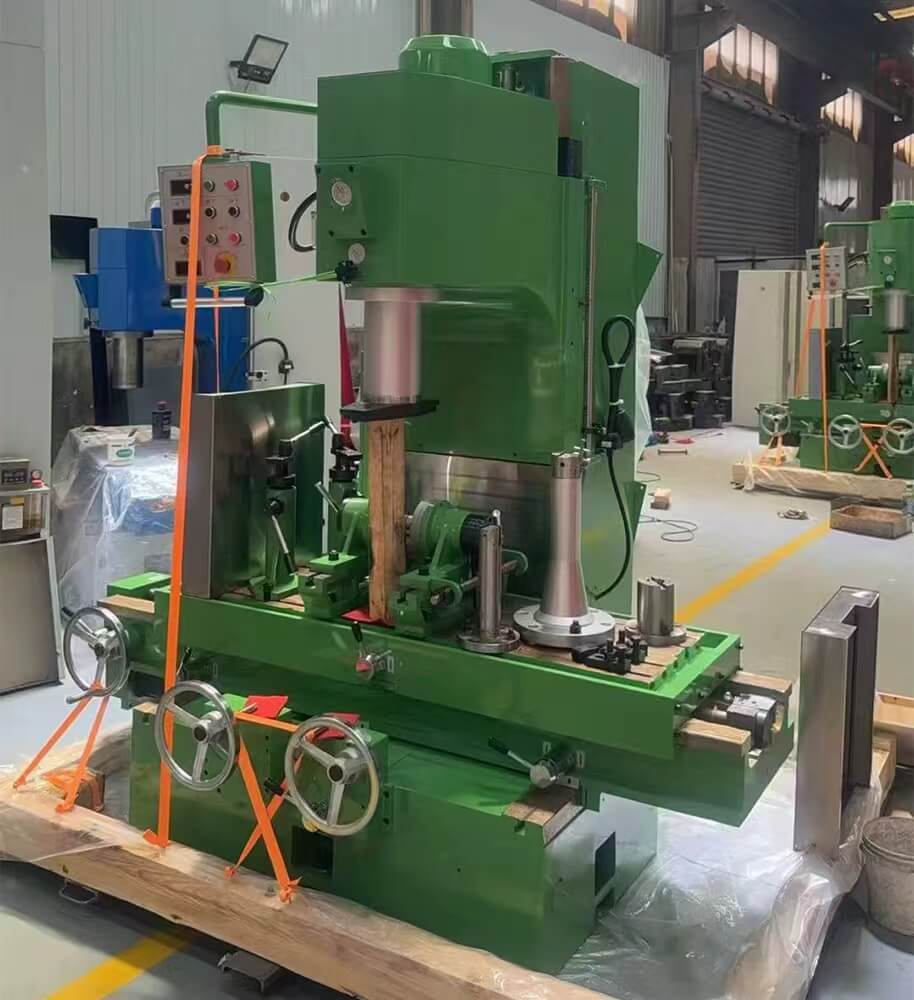
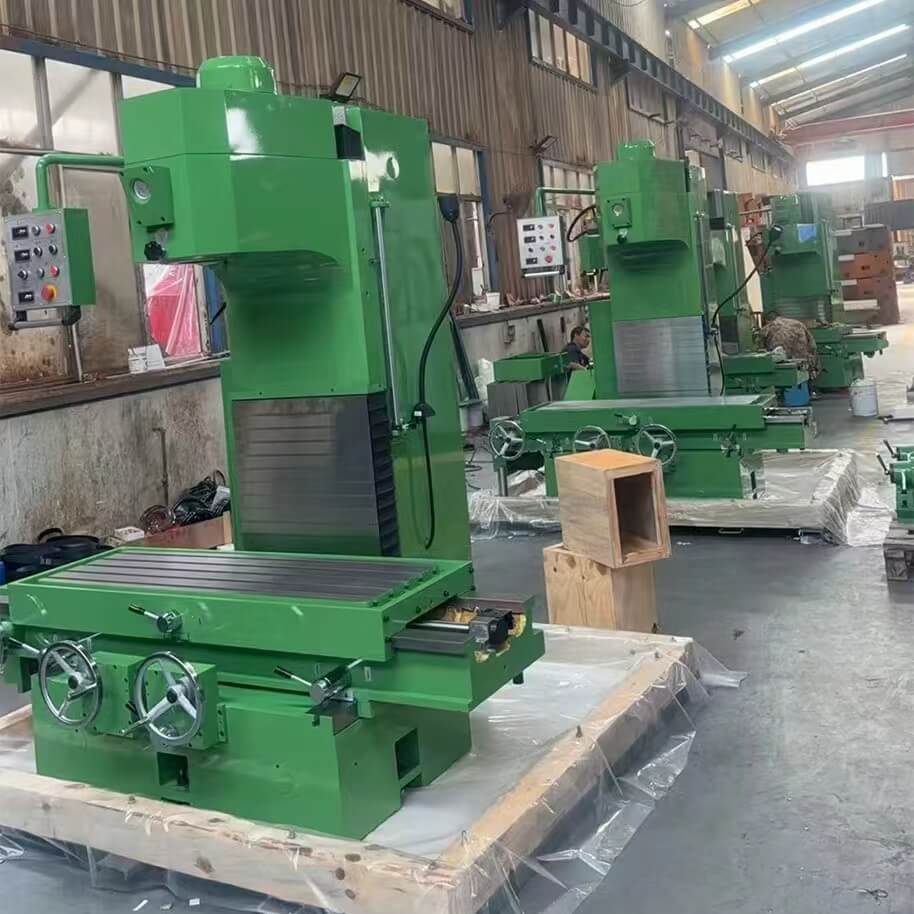
Heavy-Duty 3.5 t Cast Iron Base
Vibration-Damped Structure for Heavy Cuts
The 3500 kg one-piece base absorbs the cutting load of a 5.5 kW main motor, keeping surface finish stable on continuous production runs — not just on the first block of the day.
Technical Specifications
| Max. boring diameter | 200 mm |
| Max. boring depth | 500 mm |
| Max. milling area | 400 × 1000 mm |
| Max. drilling & reaming diameter | 30 mm |
| Spindle speed | 120–860 r/min |
| Feeding of the spindle | 14–900 mm/min |
| Rapid moving speed of the spindle | 900 mm/min |
| Spindle travel | 700 mm |
| Distance between spindle end face and table | 0–700 mm |
| Distance between spindle axis and carriage vertical plane | 365 mm |
| Longitudinal feed of worktable | 32–1350 mm/min |
| Rapid moving speed of the table longitudinal travel | 1350 mm/min |
| Max. longitudinal travel of the working table | 1500 mm |
| Max. cross travel of the working table | 200 mm |
| Worktable size (W × L) | 500 × 1500 mm |
| Dimensional precision of boring hole | H7 |
| Machining precision – Roundness | 0.005 mm |
| Machining precision – Cylindricity | 0.01/300 mm |
| Machining precision – Milling flatness | 0.10 mm |
| Surface roughness – Boring | Ra 2.5 µm |
| Surface roughness – Milling | Ra 3.2 µm |
| Main motor | 5.5 kW |
| Overall dimensions (L × W × H) | 260 × 163 × 230 cm |
| Packing dimensions (L × W × H) | 225 × 190 × 227 cm |
| N.W. / G.W. | 3500 / 3800 kg |
Applications
Designed for Engine Rebuilding Professionals
FAQ
1. What is the difference between the T7220D and a resurfacing machine like the KSM850?
They do different jobs on the same block. The T7220D bores cylinder holes and sleeve seats — round, accurate holes up to 200 mm — and mills the deck flat in the same setup. The KSM850 is a dedicated resurfacing machine for head and block sealing faces. A rebuilding shop that does full overhauls typically needs both: boring for the bores, resurfacing for the sealing faces.
2. What accuracy does the T7220D hold?
Bored holes come out at H7 diameter tolerance with 0.005 mm roundness and 0.01/300 mm cylindricity, at Ra 2.5 µm surface finish. Deck milling flatness is 0.10 mm with Ra 3.2 µm. These figures are machine specifications — real-world results also depend on fixturing and tooling condition.
3. Can it mill as well as bore?
Yes. The milling head covers a 400 × 1000 mm area with 0.10 mm flatness, which is enough to machine the deck of an inline block in one pass without repositioning. Boring and milling share one setup, so the bore axis and the finished face stay referenced to each other.
4. What workpieces fit the T7220D?
The 500 × 1500 mm table with 1500 mm longitudinal travel takes inline 4- and 6-cylinder automotive blocks, V6 blocks, motorcycle cylinder bodies and air compressor bodies. The 200 mm bore × 500 mm depth range covers standard automotive cylinder bores and most sleeve seats.
5. What tooling does it take?
Standard boring bars and tool holders for 200 mm-class vertical boring machines. Milling accepts face mills suited to cast iron and aluminum blocks. We supply a starter tooling package matched to the diameters you machine — send your block list and we will spec it with the quotation.