Engine overheating, prolonged heavy-load operation and repeated thermal cycling can gradually affect the condition of cylinder heads and engine blocks.
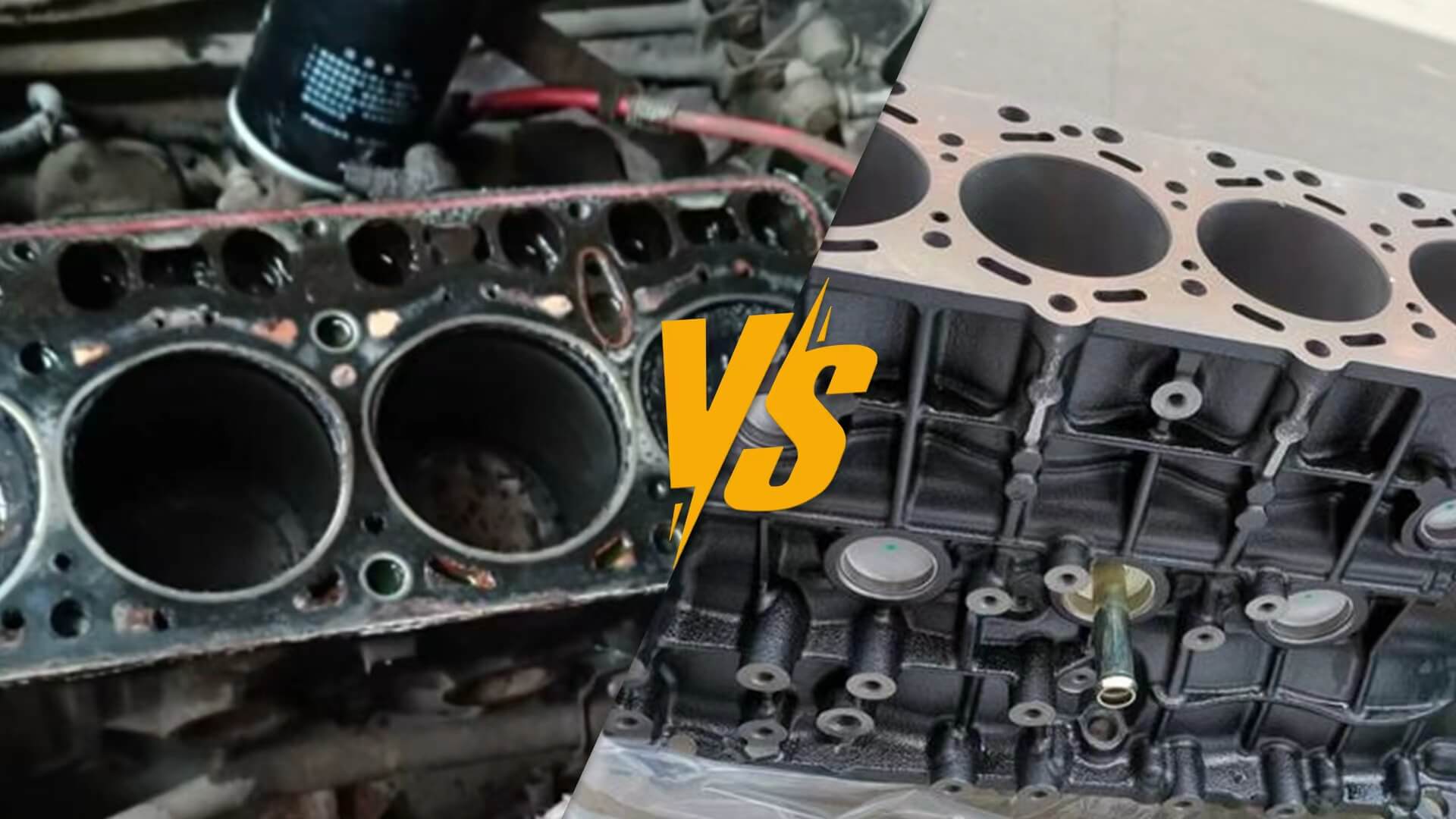
Warped deck surfaces, scratches and uneven contact areas may compromise head-gasket sealing and lead to coolant leakage, oil leakage, compression loss or repeated sealing problems after an engine rebuild.
For professional engine rebuilding workshops, the question is not simply whether a damaged component can be reused. The more important question is whether its critical dimensions and sealing surfaces can be accurately restored before assembly.
This is where cylinder head and engine block resurfacing becomes an important part of the rebuilding process.
Why Do Engine Rebuilders Resurface Cylinder Heads and Blocks?
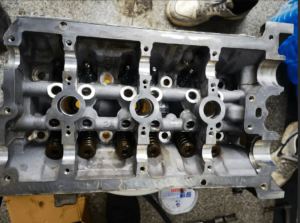
A cylinder head or engine block may appear usable from a visual inspection while still having dimensional problems caused by heat and long-term operation.
Common conditions include:
- Warped deck surfaces
- Uneven sealing areas
- Scratches and surface damage
- Previous gasket damage
- Distortion caused by overheating
- Surface irregularities after long-term use
If these problems are not corrected, installing a new head gasket alone cannot guarantee proper sealing.
Professional engine rebuilders therefore inspect and measure the component before deciding whether resurfacing is required. The KSM850 Cylinder Head & Block Resurfacing Machine is specifically designed to address these dimensional restoration needs.
What Happens During Cylinder Head Resurfacing?
The purpose of resurfacing is to remove the damaged or distorted surface layer and restore the deck to the required machining condition.
The process must be controlled carefully.
Removing too little material may leave surface defects, while removing too much can affect engine geometry and component dimensions.
For this reason, professional resurfacing is not simply about making a cylinder head flat.
It is about achieving the required flatness, surface condition and dimensional relationship for the specific engine.
This is particularly important for modern engines using different types of head-gasket designs and sealing requirements.
Why Is Engine Block Resurfacing Also Important?
Cylinder blocks experience the same thermal and mechanical stresses as cylinder heads.
After long-term operation or overheating, the block deck may require inspection and resurfacing before rebuilding.
A properly prepared block deck provides the appropriate mating surface for cylinder-head installation and helps establish the conditions required for reliable gasket sealing.
This is especially relevant when rebuilding:
- Passenger-car engines
- Diesel engines
- Commercial vehicle engines
- Agricultural machinery engines
- Construction equipment engines
- Industrial engines
How Does the KSM850 Fit Into the Engine Rebuilding Process?
The KSM850 Cylinder Head & Block Resurfacing Machine combines milling and grinding functions for engine component resurfacing.
Its design allows workshops to process both cast-iron and aluminum cylinder heads and engine blocks, with tooling selected according to the material and required machining process.
For cast-iron components, CBN tooling can be used for controlled machining.
For aluminum components, PCD tooling provides a suitable option for the required cutting and surface-finishing characteristics.
This makes the KSM850 suitable for workshops that work with different engine materials rather than focusing on only one type of component.
What Types of Engine Components Can Be Processed?
With a maximum workpiece capacity of 850 x 330 mm, the KSM850 can accommodate a broad range of automotive and engine-rebuilding components within its working range.
With the appropriate fixture configuration, workshops can process different cylinder-head and block designs, including suitable inline and V-type engine components.
This flexibility is particularly useful for engine rebuilders who handle multiple engine models rather than specializing in one specific engine family.
Why Is Combined Milling and Grinding Useful?
Different engine components and materials may require different machining approaches.
Milling provides efficient material removal and controlled deck resurfacing.
Grinding can provide another finishing method when the required machining conditions call for it.
Having both capabilities in one machine gives an engine-rebuilding workshop greater flexibility when selecting the appropriate process for the component being repaired.
The final machining method should always be selected according to the material, component condition and required engine specifications.
How Accurate Does Engine Resurfacing Need to Be?
Precision matters because the resurfaced surface becomes part of the engine’s sealing system.
The KSM850 can achieve machining flatness of 0.02 mm or better over the full working surface under suitable machining conditions.
However, the final acceptable result should always be verified against the specifications of the engine being rebuilt.
Factors such as material, tooling, machining parameters, fixture setup and the original condition of the component can affect the final result.
This is why professional engine machining combines accurate equipment with measurement and inspection rather than relying on the machine alone.
Which Workshops Can Benefit From In-House Resurfacing?
For workshops that frequently send cylinder heads and engine blocks to outside machine shops, bringing resurfacing capability in-house can provide greater control over the rebuilding process.
Potential benefits include:
- Faster workshop scheduling
- Reduced dependence on outside machining services
- Better control of machining quality
- Easier inspection before and after machining
- Greater flexibility for different engine types
- More efficient engine-rebuilding workflow
The value becomes particularly clear for businesses that regularly process used engine components.
Where Is Cylinder Head & Block Resurfacing Used?
Cylinder resurfacing is relevant across several engine-rebuilding sectors.
Automotive Repair
Passenger-car and light-commercial engine repair shops use resurfacing as part of cylinder-head and block rebuilding.
Diesel Engine Rebuilding
Diesel workshops may process cylinder heads and blocks from commercial vehicles, agricultural machinery and heavy equipment.
Engine Remanufacturing
Remanufacturing facilities can incorporate resurfacing into their engine-core recovery workflow.
Performance Engine Building
Performance-engine workshops use controlled machining when preparing components for modified or rebuilt engines.
Motorsport Engine Rebuilding
Motorsport workshops may also require precise deck preparation when rebuilding competition engines, subject to the applicable engine specifications and competition regulations.
What Is the Typical Engine Resurfacing Workflow?
A professional rebuilding process can typically be organized as:
Inspection -> Measurement -> Cleaning -> Resurfacing -> Final Measurement -> Inspection -> Assembly
The exact sequence depends on the engine and the condition of the component.
The important point is that resurfacing should be based on measured wear and required dimensions, rather than automatically machining every component.
KSM850 in Engine Rebuilding
The KSM850 is designed for workshops that need a flexible machine for cylinder head and engine block resurfacing.
Its combination of milling and grinding, support for cast iron and aluminum, and working capacity of 850 x 330 mm allows it to cover a broad range of engine-rebuilding applications.
For professional engine rebuilders, the objective is straightforward:
Recover the usable engine component, restore the required surface condition, and prepare it for reliable reassembly.
That is ultimately what makes precision resurfacing an important part of modern engine rebuilding.
Ready to Elevate Your Engine Rebuilding Quality?
Discover how the KSM850 Cylinder Head & Block Resurfacing Machine can help your workshop achieve precision results.
FAQ
What is a cylinder head resurfacing machine used for?
It is used to restore the deck surface of a cylinder head after warpage, wear or surface damage.
Can the KSM850 resurface engine blocks?
Yes. The KSM850 is designed for both cylinder heads and engine blocks within its working capacity.
Can it machine aluminum and cast iron?
Yes. Suitable tooling can be selected for both aluminum and cast-iron engine components.
What is the maximum workpiece size?
The maximum workpiece size is 850 x 330 mm.
What machining accuracy can the KSM850 achieve?
Machining flatness can reach 0.02 mm or better over the full working surface under suitable machining conditions.
Is the KSM850 suitable for diesel engine rebuilding?
Yes. It can be used for suitable automotive, commercial, agricultural and heavy-duty diesel engine components.
Why should a cylinder head be resurfaced before rebuilding?
Resurfacing can restore the required deck condition and help establish the proper surface for cylinder-head and gasket assembly.